Mazy Holiday Mazy Holiday

Why Vanity Metrics Are  Killing Your Creator Income

Likes, followers, and impressions feel like progress. They're not. Here's what to measure instead — and why it changes everything.

Vanity metrics — likes, follower counts, impressions — feel rewarding but have almost no correlation with creator income.

Creators who track revenue attribution instead of engagement signals earn significantly more and make smarter decisions about where to spend their time. The good news: switching what you measure takes minutes. The results follow within weeks.

Here's something nobody talks about at creator conferences: you can have 50,000 followers, post every single day, get thousands of likes per post — and still not be able to pay your rent from content.

It happens all the time. And it's not bad luck. It's the metrics.

The platforms built their dashboards to keep you engaged with their product, not to help you run yours. So they surface the numbers that feel the best — reach, impressions, follower growth — and bury the one number that actually matters: how much money your audience is generating for you.

This post is about that gap, why it's costing creators real income, and exactly what to track instead.

The Vanity Metric Trap: What's Really Happening

Dopamine is the problem. When a post gets 2,000 likes, your brain releases the same reward signal as a sale. The platforms know this. It's by design. A like costs the viewer nothing and pays you nothing — but it feels significant because the number is large.

This creates a dangerous feedback loop: creators optimize for what feels good to track (engagement, follower count) instead of what actually builds income (revenue per follower, conversion rate, subscriber value).

The result? Creators become incredibly good at producing content that gets liked — and surprisingly bad at producing content that gets bought.

The 5 Vanity Metrics Creators Obsess Over (And What They Really Mean)

1. Follower count

A follower who never buys anything is worth exactly $0. A follower who purchases your course every year is worth potentially hundreds of dollars. Yet most creator dashboards treat both as equal — they're not. Follower count tells you the size of your audience. It tells you nothing about the quality.

2. Likes and reactions

Likes correlate with dopamine, not dollars. A "behind the scenes" photo of your desk can outperform your best product post by 10x in likes — and generate zero revenue. If you're optimizing for likes, you're optimizing for the wrong outcome.

3. Impressions and reach

Reach is a distribution metric, not a revenue metric. A post that reaches 100,000 people but drives no clicks to your product is less valuable than a post that reaches 2,000 of exactly the right people and converts 3% of them. Reach without intent is noise.

4. Engagement rate

Engagement rate is the most seductive vanity metric of all because it sounds sophisticated. A high engagement rate means people are interacting with your content. But interaction is not transaction. Comments, shares, and saves are the beginning of a relationship — not the end of a sale.

5. Profile views and website clicks

A click to your website is better than no click. But if you're not tracking what happens after the click — what visitors buy, what they sign up for, what they ignore — you're still flying blind. Traffic without attribution is just traffic.

"You can have 50,000 followers and still not pay rent from your content. The metrics are the problem."

What You Should Track Instead

Revenue attribution sounds technical. It isn't. It's simply asking: which specific posts, on which specific platforms, with which specific calls to action, resulted in actual money entering your bank account?

Once you start tracking that, everything changes. Here's what matters:

The Metrics That Actually Build Creator Income

  • Revenue per follower, by platform. Your Instagram followers might earn you $12 each. Your X followers are $3. That tells you where to invest your time and energy — not where your engagement rate is highest.

  • Revenue per post type. Are "how-to" posts generating 3x more revenue than interview posts? That's not a coincidence — that's a content strategy waiting to be built.

  • Conversion rate on promotional content. Of the posts designed to drive sales, what percentage actually do? Track it per post, per platform, per format.

  • Subscriber or follower LTV. What's a new follower actually worth over 12 months? Know this number, and you know exactly how much you can afford to spend acquiring a new audience member.

  • Content ROI. How much did it cost you in time and money to produce this post, and how much revenue did it generate? This is the metric that separates creators who scale from creators who stall.

The Platform Problem: Why Social Networks Don't Want You to Know This

Social platforms are advertising businesses. Their revenue comes from keeping you — and your audience — on-platform as long as possible. They have a powerful financial incentive to measure your success in terms of engagement, because engagement keeps people scrolling, and scrolling generates ad revenue for them.

They have zero incentive to help you understand which followers make you money. In fact, if you knew your X audience earned you $3 per follower while your newsletter list earned you $40 per subscriber, you might post less and email more. That's bad for their metrics. So the data stays hidden.

This is why revenue attribution has to be built independently — outside the native platform tools. And it's why creators who do build it have a structural advantage over those who don't.

What the Real Numbers Look Like

When creators shift from tracking vanity metrics to tracking revenue attribution, the same data looks completely different. Consider a creator with 12,000 followers across three platforms:

On the surface: solid engagement, growing audience, consistent posting. Everything looks healthy. But when you pull revenue data, a different picture emerges. 80% of their revenue comes from LinkedIn, which has only 15% of their total audience. Their highest-engagement platform — Instagram — generates almost nothing in sales. Every hour spent crafting Instagram content is an hour not spent on LinkedIn, where the buyers actually live.

This creator doesn't need more followers. They should redirect 60% of their content effort to LinkedIn and expect their income to double without gaining a single new follower.

That insight is invisible if you're watching likes. It's obvious if you're watching revenue.

How to Fix This: A Practical Starting Point

You don't need an enterprise analytics stack to start measuring what matters. You need a few things in place.

First, every promotional post — any post designed to sell something — needs UTM tracking on the link. UTM parameters are short codes appended to URLs that tell your analytics platform which post drove which visit. They're free, take two minutes to set up, and immediately start connecting your social activity to your revenue data.

Second, you need a single place to view all of it. Revenue from different sources (courses, coaching, affiliate, subscriptions) is attributed back to specific content in one dashboard. Not six different platforms — one.

Third, you need to review this data on a cadence — weekly or monthly — and make one decision based on it. Which platform is earning the most? Post more there. Which content format is converting? Produce more of that. This is the compounding advantage that analytics-driven creators build over time.

The 5-3-2 Content Rule: Balancing Engagement and Revenue

  • 5 value posts: Pure teaching, insight, entertainment. Builds trust and reach. No direct sales.

  • 3 personal posts: Behind-the-scenes, process, story. Builds connection and loyalty.

  • 2 promotional posts: Direct calls to action. These are the posts you track revenue attribution on.

The 5 and 3 personal posts earn you the right to make the 2 promotional posts. Track the promotional posts obsessively. Optimize everything else for reach and engagement. This is the ratio — and it works because it mirrors how audiences actually build trust.

Beyond Attribution: Predictive Analytics and What's Coming

Revenue attribution is the starting point. What becomes possible once you have enough data is more interesting: prediction.

With 12 months of content performance data mapped to revenue outcomes, patterns emerge. Which content formats drive sales 30 days later? What follower milestones correspond to revenue inflection points? Which platforms have the highest 6-month follower LTV? What percentage of your audience typically converts at each stage of their relationship with you?

These patterns, aggregated across thousands of creators in the same niche and follower range, become forecasting tools. "Based on your current trajectory and what we know about creators like you, you'll generate $24,000 in revenue by Q4." That's not a guess. That's pattern-matching against real outcomes from real creators who were in your shoes six months ago.

This is where creator analytics is heading — and it's why the creators who start tracking revenue now will have a significant head start when these tools become widely available.

Frequently Asked Questions

Are vanity metrics completely useless?

Not completely. Engagement rate and follower growth are leading indicators that can signal whether your content strategy is working in the short term. The problem is treating them as end goals instead of diagnostic signals. Use them to assess content quality; use revenue metrics to make business decisions.

How many followers do I need before revenue tracking matters?

Revenue tracking matters from the moment you have your first product or affiliate link. In fact, it's more important at 1,000 followers than at 100,000 — because with a small audience, every hour of your time has to count. Knowing which posts drive your sales from the beginning shapes how you build your content strategy from day one.

What's the simplest way to start tracking revenue attribution?

Start with UTM parameters on every link you share in a promotional post. Google's UTM builder is free. Add it to your next post, connect Google Analytics to your website, and you'll have basic attribution data within 48 hours. From there, you can layer in more sophisticated tracking as your income grows.

Does platform matter for revenue — or is my content the main variable?

Both matter, but the platform often matters more than creators expect. The same creator, posting identical content, can see wildly different revenue outcomes on LinkedIn versus Instagram versus X — because the audiences have different buying intent, demographics, and relationships with content. Track by platform from the start to find where your buyers actually live.

How is Tonimus different from just using Google Analytics?

Google Analytics tracks your website. Tonimus tracks your entire social media operation — from the post that generated the click, to the platform it came from, to the revenue it produced — and then benchmarks your results against creators with similar audience profiles in the same niche. It also handles the posting and engagement autonomously, so you're not spending 15–20 hours a week managing the operation that generates that data.


Read More
Mazy Holiday Mazy Holiday

How to Build + Retain an Audience as a Content Creator

How to Build and Retain and Audience using Tonimus

Most content creators obsess over the wrong number. They watch their follower count like a stock ticker, celebrating every uptick and spiraling over every plateau. But follower count is one of the least useful metrics in the creator economy.

What actually matters is whether the right people are finding you — and whether they stick around once they do. Building an audience isn’t a growth hack. It’s a long game built on trust, consistency, and knowing exactly who you’re talking to.

Here’s what that actually looks like in practice.

Start With a Specific Person, Not a Broad Audience

The biggest mistake new content creators make is trying to appeal to everyone. “My audience is anyone who likes fitness” is not an audience — it’s a category. And categories don’t share your content, tell their friends about you, or buy what you’re selling.

The creators who build the most loyal followings start hyper-specific. Not “fitness,” but “strength training for women over 40 who are returning to the gym after a long break.” Not “personal finance,” but “debt payoff strategies for first-generation college graduates.”

When your content speaks directly to a specific person’s situation, that person doesn’t just follow you — they feel like you made it for them. That’s the foundation of retention.

Own Your Audience — Don’t Just Rent It From Platforms

Here’s the truth about social media followers: they’re not really yours. Algorithms change. Platforms throttle reach. Accounts get suspended. A creator who spent three years building 50,000 Instagram followers can see their engagement collapse overnight because of a policy update they had no say in.

The smartest thing any content creator can do — starting from day one — is build an email list. Email is the only audience you truly own. No algorithm stands between you and your subscribers. When you send an email, it lands directly in their inbox.

Even a list of 500 genuinely interested subscribers will outperform 10,000 passive social followers when it comes to actual revenue. Use every piece of content you create as an opportunity to move people from “follower” to “subscriber.”

Retention Is About Consistency (not frequency)

There’s a persistent myth in the creator world that you need to post constantly to stay relevant. That’s not what keeps audiences around. What keeps people coming back is knowing they can count on you.

Pick a cadence you can actually sustain — whether that’s one video a week, a newsletter every Tuesday, or three posts a week on LinkedIn — and stick to it. An audience that knows when to expect you will show up for you. An audience that gets flooded with content for two weeks and then silence for a month will quietly unfollow.

Consistency also signals professionalism. It tells your audience that you take this seriously — which makes them take you more seriously too.

Engagement Is a Two-Way Street

The creators with the most loyal audiences treat their followers like a community, not a viewership. They respond to comments. They ask questions. They let their audience influence what they create next. And if you can, let them get to know you a bit. People have to be able to relate to you.

This doesn’t mean you need to reply to every comment on every platform forever. But especially in the early stages, the time you spend engaging with your audience directly is more valuable than the time you spend creating more content. One genuine exchange in the comments can turn a passive viewer into a loyal follower for years.

Pay attention to what your audience responds to. Track which posts generate real conversation versus which ones get scrolled past. That feedback is your content strategy — and it’s free.

Go Get ‘Em

Audience building isn’t about going viral. It’s about finding the right people, showing up consistently for them, and creating content specific enough that it feels personal. Followers develop loyalty by getting to know you. Do that long enough, and retention takes care of itself.

The creators who build lasting audiences aren’t the ones who got lucky with one post. They’re the ones who kept showing up, kept paying attention, and kept treating their audience like real people worth their time.

Tonimus helps you track exactly which content is driving real audience growth and revenue — so you stop guessing and start optimizing. Get 6 months of Pro Free if you become a Beta Tester - Join the Waitlist at tonimus.ai

Read More
Mazy Holiday Mazy Holiday

Should I become an Online Creator?

Wondering if you should become an online content creator? Tonimus breaks down the honest truth about the creator economy, what it actually takes to succeed, and how to know if it’s right for you in 2026.

By the Tonimus Team

(An Honest Answer for 2026)

Wondering if you should become an online content creator? Tonimus breaks down the honest truth about the creator economy, what it actually takes to succeed, and how to know if it’s right for you in 2026.

Every week, thousands of people search some version of this question: “should I become an online content creator?” Maybe you’re one of them. You’ve watched creators build audiences, launch products, quit their 9-to-5, and live what looks like the dream. And you’re wondering: could that be me?

Maybe. But probably not in the way you’re imagining.

We built Tonimus — a platform that helps content creators grow their audience and track their revenue — so we have a front-row seat to what actually works and what doesn’t in the creator economy. And because we’d rather have 1,000 creators who succeed on our platform than 10,000 who churn out after a month, here’s the unfiltered truth.

What Does It Mean to Be an Online Content Creator?

When most people say “creator,” they picture someone with a ring light and a million followers doing brand deals. That’s one version — but it’s a tiny sliver of the actual creator economy.

The online content creators who tend to do well — and the ones Tonimus was designed for — are people who already have something to say. Podcasters. Online educators. Coaches. Authors. Newsletter writers. People who create content around expertise, not just entertainment. If you have knowledge that other people find genuinely valuable, you’re already ahead of 90% of people asking this question.

How to Know If Becoming a Content Creator Is Right for You

Before you buy a microphone or set up a TikTok account, ask yourself these five questions.

1. Do you already have a niche you’re known for?

You don’t need to be famous. But you do need a subject you can talk about consistently for months (or years) without running dry. It could be personal finance, parenting, web development, fitness, cooking, real estate — anything. But “I’ll figure out my niche later” is the number one predictor of quitting within three months.

2. Are you okay with being ignored for a while?

The first six months of creating content online are humbling. You’ll post things you’re proud of and hear crickets. That’s normal. The creators who make it through that phase are the ones who were going to create the content whether anyone watched or not — because the content itself matters to them.

3. Do you have (or want to build) something to sell?

Followers alone don’t pay rent. The content creators who actually earn a living have something behind the content: a course, a coaching program, a membership, merchandise, affiliate partnerships, a book, a consulting practice. Content is the front door. You need something inside the house.

4. Can you commit to consistency?

Not daily — that’s a myth. But can you publish something valuable on a regular cadence for at least a year? Two or three posts a week, every week, for twelve months. That’s the minimum viable commitment. If that sounds exhausting before you’ve even started, this might not be the right time.

5. Are you building for revenue, not just fun?

This is the question that separates hobbyists from professionals. There’s nothing wrong with creating content for fun. But if you’re looking at this as a career move, you need to think about monetization from day one — not as an afterthought six months in when you realize likes don’t pay bills.

Who Should NOT Become an Online Content Creator (Right Now)

This isn’t gatekeeping. It’s saving you from wasting a year of your life.

•       Your primary motivation is “I want to be famous.” Fame is a terrible business plan. The content creators who earn real money are often people you’ve never heard of — they serve a specific audience exceptionally well and monetize through products, not sponsorships.

•       You don’t have a subject yet. “I want to start a YouTube channel” is not a plan. “I want to help first-time homebuyers understand the closing process” is a plan. One of those people will still be creating content in a year. The other will have three abandoned channels.

•       You need income from this immediately. The creator economy is a long game. If you need to replace your salary in the next 90 days, get a job first and build your creator presence on the side. That’s not a failure — that’s smart financial planning.

•       You’re not willing to learn the business side. Posting content is maybe 40% of being a successful content creator. The rest is understanding your audience, optimizing what works, managing your revenue streams, and treating your content like a business. If the words “conversion rate” and “revenue attribution” make your eyes glaze over, you’re going to struggle.

Who SHOULD Become an Online Content Creator

•       You have expertise people pay for already — as a consultant, freelancer, coach, teacher, or professional — and you want to reach more of them. Content is the most scalable version of what you already do one-on-one.

•       You’re already creating content casually and getting a positive response. People share your LinkedIn posts. Your podcast with twelve listeners has superfans. Your tweets get saved and screenshotted. Those are signals. Pay attention to them.

•       You have a product or service and need a distribution channel. If you sell courses, coaching, physical products, or software and you’re tired of paying for ads, building an organic audience through content is the most cost-effective long-term strategy that exists.

•       You think in systems, not just vibes. The content creators who earn real income treat their content like a business: they track what works, they have a strategy for how often to post and where, they know which posts drive actual revenue and which ones just get likes. If that sounds like you, you’re already thinking like a Tonimus user.

How Much Can You Realistically Earn as a Content Creator?

Here’s what the creator economy actually looks like for someone who commits and does it right.

•       Months 1–3: You’re building your content library and finding your voice. Revenue from content: likely zero. That’s fine.

•       Months 4–6: You start to see traction. A few hundred followers. Some engagement. Maybe your first small sale from a link in your bio. Revenue: maybe $100–$500 total.

•       Months 7–12: If you’ve been consistent and strategic, this is where the compounding begins. You have enough content that platforms start recommending you. Revenue: $500–$3,000/month is realistic for a content creator with a real product and a focused niche.

•       Year 2 and beyond: This is where it gets interesting — and where tools like Tonimus start to really pay for themselves. You have data. You know what converts. You can optimize instead of guess. Creators at this stage regularly see $3,000–$15,000+ per month from content-driven revenue.

None of this happens by accident. It happens by showing up consistently, selling something real, and paying attention to the numbers.

Frequently Asked Questions: Becoming an Online Content Creator

How do I start as an online content creator with no experience?

Start by choosing a specific niche based on your existing knowledge or skills. Pick one platform, commit to a consistent posting schedule, and focus on providing real value to a defined audience. You don’t need fancy equipment — a smartphone and a clear point of view are enough to begin.

How long does it take to make money as a content creator?

Most content creators don’t see meaningful income until 6–12 months in. The timeline shortens significantly if you have an existing audience, a product to sell, or you’re working in a profitable niche like finance, tech, or business.

What is the best platform for new content creators in 2026?

It depends on your content type. YouTube is best for long-form educational content. TikTok and Instagram Reels are ideal for short-form video. Newsletters (via Substack or similar) work well for written thought leadership. Choose where your target audience already spends time.

Do I need a big following to earn money as a content creator?

No. Many full-time content creators have audiences of under 10,000 people. What matters more than size is how engaged your audience is and whether you have a product or service that interests them. A highly engaged niche audience outperforms a large, passive one every time.

So, Should You Become an Online Content Creator?

If you read this whole article and you’re still excited — if the honest timeline didn’t scare you off and the checklist made you nod more than wince — then yes. You should probably give it a real shot.

And when you’re ready to stop guessing which posts are working and start seeing exactly where your revenue comes from, Tonimus will be here.

Tonimus autonomously posts/engages in your branded voice, and tracks exactly which content drives revenue — all in your Da$hboard™. Follow us on Facebook

Read More
Mazy Holiday Mazy Holiday

Why OpenClaw Can’t Replace Tonimus

Generic AI Agents vs. Purpose-Built AI Tools for Content Creators: Why It Matters for Your Revenue 

The AI world is buzzing about open-source agents like OpenClaw (ClawdBot). And the hype makes sense. AI tools that can automate tasks, browse the web, and execute workflows on your behalf sound like a dream — especially for content creators juggling five platforms, a dozen revenue streams, and zero free time (security risks be damned).

But here’s what nobody’s talking about: there’s a massive gap between “can do anything” and “does what you actually need.”

If you’re a content creator trying to grow your audience and your income, that gap is where your time, money, and brand reputation go to die. This is a full breakdown of why a purpose-built AI platform for content creators like Tonimus isn’t just different from a generic AI agent — it’s a completely different category.

1. Generic AI Agents Don’t Know Your Niche — Creator Platforms Do

A generic AI agent running on your laptop can track your metrics. That’s fine. But it can’t tell you that fitness content creators in your follower range earn $45 per 1,000 views on YouTube versus $12 on Instagram. It can’t flag that how-to posts generate three times more revenue than interview-style content in your specific niche. It has no idea that creators with your niche content mix typically see revenue plateau at 50K followers on TikTok.

Why not? Because it’s working with a sample size of one — you.

Tonimus aggregates anonymized performance data across thousands of content creators. Every recommendation gets smarter as the platform grows. It’s the difference with Tonimus you can track your revenue streams and have access to industry-wide insights tailored only to your creator category.

Think of it this way: A generic AI agent is a calculator. Tonimus is a Bloomberg Terminal for content creators. The value isn’t in doing math — it’s in having data nobody else has.

2. Revenue Attribution: The Hardest Problem for Content Creators

One of the biggest challenges content creators face is answering a deceptively simple question: which piece of content actually generated cash?

Connecting the dots between “someone followed me on Tuesday” and “that same person bought my course on Friday” requires deep integrations with Shopify, Gumroad, YouTube and more. It requires correlation algorithms, multi-touchpoint attribution modeling, and constant maintenance as platforms change their APIs.

Tonimus has spent months building this infrastructure to achieve 95%+ revenue attribution accuracy. A creator using a generic AI agent would need to build all of this from scratch — set up payment integrations, write attribution logic, maintain it as platforms evolve, and trust their own implementation with real money on the line.

That’s not a weekend project. That’s a full-time engineering job.

3. Your Creator Brand Is Too Valuable for a Generic AI Voice

Content creators are brands. And brands live or die by consistency.

Tonimus learns each creator’s specific voice through a calibration process and maintains consistency “brand voice scores: across all generated content. That matters because one off-brand post doesn’t just get fewer likes — it can cost you a sponsorship deal worth $10,000 to $50,000.

A generic AI agent has no voice training, no quality scoring, and no guardrails. It produces whatever the base model thinks sounds good, which often means generic AI-sounding content that audiences can spot instantly.

Content creators working with brand partners simply cannot afford to let an unmonitored agent post content that damages their reputation.

4. Security and Compliance: What Professional Creators Actually Need

This is the part that doesn’t sound exciting but keeps creators up at night once they think about it.

Tonimus offers SOC 2 compliance for creators working with enterprise brands, professional customer support, uptime guarantees, and proper security for financial credentials. There’s no risk of API keys stored in plaintext or credentials leaking through an improperly configured open-source tool.

Content creators building toward $50K to $200K per year in income can’t afford to risk their business on a tool with no support line, no insurance, and no liability coverage. Professional creator income requires professional infrastructure.

5. Time to Value: 48 Hours vs. 40+ Hours of Setup

The onboarding difference alone tells the story of why purpose-built AI tools for content creators win.

With Tonimus, a content creator signs up, connects their platforms, starts a trial, and sees results within 72 hours.

With a generic AI agent, the same creator needs to install the tool, configure security, build integrations, set up automation rules, debug issues, engineer prompts, and continuously monitor and maintain the whole setup – and worry about security. That’s 40+ hours of technical work before seeing any value — and it assumes a level of technical skill most content creators simply don’t have.

Content creators need solutions, not projects.

What’s the Best AI Tool for Content Creators?

#OpenClaw is impressive technology. But technology without context is just a faster way to do the wrong thing.

Tonimus gives content creators critical data to grow, but most importantly to grow revenue.

Frequently Asked Questions

What makes an AI tool purpose-built for content creators?

A purpose-built AI tool for content creators goes beyond general task automation. It integrates with creator-specific platforms (YouTube, Patreon, TikTok, Gumroad), understands creator revenue models, learns your unique voice, and uses benchmarked data from a network of creators — not just your own historical performance. General AI agents can’t do this out of the box.

Can I use a generic AI agent like OpenClaw instead of a creator platform?

You can — but the setup cost is enormous. Expect 40+ hours of technical configuration, ongoing maintenance, zero creator-specific benchmarks, no voice calibration, and no revenue attribution out of the box. For creators focused on building their business rather than building tools, a dedicated creator platform almost always delivers faster ROI.

How does AI revenue attribution work for content creators?

AI revenue attribution for creators connects the dots between specific content and actual income. For example, it can identify that a particular YouTube video drove viewers to your email list, who then purchased your online course three days later. This requires deep integrations with payment processors, platform APIs, and correlation algorithms — infrastructure that platforms like Tonimus build and maintain so creators don’t have to.


Tonimus is the first Creator Intelligence™ platform built specifically for online creators. It autonomously generates/posts/engages, and tracks monetization — so creators can focus on what they do best.

Read More
Mazy Holiday Mazy Holiday

Building Audience Engagement Through Consistency and Brand Cohesion.

Building Audience Engagement Through Consistency and Brand Cohesion

The Strategic Value of Consistency

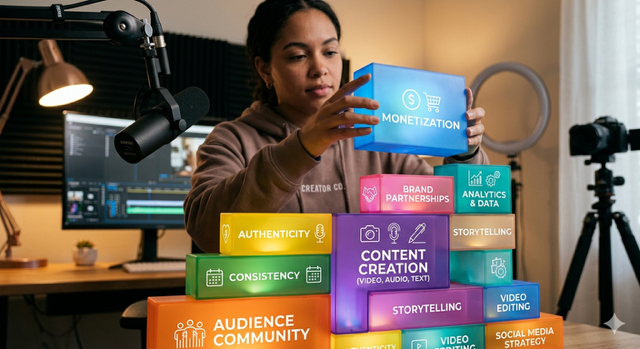
Consistency represents the single most critical factor distinguishing successful content creators from their peers.

The Strategic Value of Consistency

Consistency represents the single most critical factor distinguishing successful content creators from their peers. Establishing a regular publishing cadence builds audience trust, anticipation, and brand recognition. When audiences develop expectations around content delivery, casual viewers transform into engaged, loyal followers. But only if you have created a genuine message and authentic feel to your purpose-driven content.

Casey Neistat's daily vlog strategy exemplifies this principle. His success stemmed not solely from production quality or narrative skill, but from his unwavering commitment to daily publication. This predictable rhythm created momentum that exponentially expanded his audience reach.

Traditional media has long leveraged this approach. Television programming operates on fixed schedules that integrate into viewer routines. Digital platforms function similarly: consistent posting on Instagram, TikTok, and other channels maintains content visibility, optimizes algorithmic distribution, and reinforces brand awareness.

Balancing Frequency with Quality

While frequent posting enhances visibility on algorithm-driven platforms by providing more distribution opportunities, quality remains paramount. Audiences respond to authenticity, value, and creativity rather than volume alone. The objective is identifying an optimal publishing frequency that maintains visibility while preserving content integrity and brand voice.

Brand Cohesion as a Differentiator

Consistency drives visibility, but cohesion creates memorability. Brand cohesion requires alignment across all touchpoints: tone, visual identity, content strategy, and audience engagement. Every interaction should reinforce a unified brand narrative.

Consider Coca-Cola's decades-long maintenance of consistent color schemes and messaging architecture. The brand achieves instant recognition. Similarly, Kim Kardashian's minimalist aesthetic and Joe Rogan's authentic presentation style demonstrate how consistent brand expression builds immediate recognition and audience connection.

This cohesion enables audiences to form emotional connections not merely with content, but with the brand identity itself. In competitive digital environments, such recognition differentiates successful creators and drives sustained audience loyalty.

Leveraging AI to Enhance Creative Workflow

The evolution of content creation centers on human-AI collaboration rather than replacement. Artificial intelligence augments creative processes by automating operational tasks, enabling creators to focus on core competencies: ideation, storytelling, and authentic audience connection.

Strategic creators deploy AI as collaborative infrastructure to streamline workflows through content repurposing, cross-platform scheduling, and audience engagement while maintaining brand voice consistency. This approach achieves strategic consistency: delivering authentic, brand-aligned content at scale without compromising creator capacity or risking burnout.

In the end . . .

Successful audience development requires three interconnected elements: consistency builds recognition, frequency drives engagement, and quality establishes loyalty. When combined with intelligent automation tools, creators can maintain consistent output, strengthen audience relationships, and achieve sustainable online impact. The most effective strategies preserve human creativity, curiosity, and emotional resonance while leveraging technology to amplify reach and efficiency.

Tonimus is built to drive audience growth through genuine engagement. By learning about you and your purpose, what drives you, Tonimus creates authentic social engagement that is on brand and in sync. Tonimus was built to generate, and you were put here to create. So go, create.

Read More
Mazy Holiday Mazy Holiday

5 Examples of Youtube’s Creator Power

Across diverse genres, certain influencers have risen above the competition to dominate their niches. If you want to learn how to be the best, one way is to study those that came before you.

Across diverse genres, certain influencers have risen above the competition to dominate their niches. If you want to learn how to be The Best, one way is to study those that came before you.

Take note of all the details each of these creators have put into their craft as well as their channel, incorporate these details (content, colors, style, how they promote their channel…) into your channel and make them uniquely your own. Remember, people love authenticity. Just be you.

Makeup Tutorial: James Charles

With over 24 million subscribers, James Charles has established himself as one of the most influential makeup YouTubers. The 23-year-old American YouTuber made history as the first male brand ambassador for CoverGirl. His channel features diverse makeup tutorials, product reviews, and exciting challenges. Known for bold, colorful transformations, James blends high artistry with mainstream trends while making even complex looks feel achievable. Beyond tutorials, he keeps content engaging with challenges, collaborations, and high-energy storytelling. His success demonstrates how breaking traditional gender barriers in beauty has resonated with millions of viewers worldwide.

Music: Justin Bieber

Justin Bieber's success story on YouTube is legendary. As a pre-teen, he posted videos of his music performances, covering artists like Chris Brown and Justin Timberlake. In 2007, marketing executive Scooter Braun discovered Bieber's YouTube page, leading to an introduction with Usher when Justin was only 13. Canadian Justin Bieber is the musical artist with the most followers on YouTube. Since then, Justin Bieber has sold millions of records worldwide, acquired hundreds of music awards, and is credited with multiple RIAA Gold, Platinum, and Diamond singles. His journey from bedroom covers to global superstar exemplifies YouTube's power as a discovery platform.

Film: Chris Stuckmann

Chris Stuckmann is a renowned film critic and YouTube star known for his engaging movie reviews, with over 2 million subscribers since launching his channel on January 6, 2011. He offers his unique perspective both as a film critic and appreciator, as well as a true filmmaker. In 2021, Chris revealed he had signed on with Paper Street Pictures to write and direct his first feature film, Shelby Oaks. Chris has a very calm and measured delivery, making complex film analysis accessible to casual viewers while maintaining credibility with serious cinephiles.

Gaming: PewDiePie

PewDiePie, otherwise known as Felix Arvid Ulf Kjellberg, held the most-subscribed position on YouTube for nearly 10 years until 2022. He's evolved from shriek-filled horror game playthroughs and Happy Wheels moments into a multifaceted creator, tackling everything from meme reviews to philosophical musings. One of the world's highest-paid YouTubers, PewDiePie has been featured in Time Magazine under the world's 100 most influential people. With approximately 110 million subscribers, he remains a beloved figure in gaming culture.

True Crime: Kendall Rae

Kendall Rae is the true crime YouTuber with the most subscribers, boasting over 3.6 million. Kendall is known for her compassionate approach to telling crime stories, often focusing on victim advocacy and bringing awareness to missing persons and unresolved crimes. Unlike many creators who focus on sensational details, Kendall highlights the human side of each case and has supported various families by promoting petitions and fundraising pages. Her respectful, empathetic approach has earned her audience's trust and loyalty.

These five influencers demonstrate that authenticity, consistency, and raw talent can transform YouTube channels into cultural phenomena. 

Read More
Mazy Holiday Mazy Holiday

What Makes a Successful Online Influencer?

In today's digital landscape, becoming a successful online influencer seems deceptively simple: post content, gain followers, and monetize your presence. Yet the reality is far more nuanced. What separates those who thrive from those who fade into obscurity? Here’s a short list of . . . if I’ve missed something critical, please feel free to Send me a Message! I cannot wait to connect with my Future Successful Creators.

When AI first proved itself a force to be reckoned with, people all over the world began to imagine the possibilities, including me. As a heavy consumer of podcast content and sometimes writer, I imagined a world where my favorite creators (particularly those with small audiences that should be much bigger) could grow their audiences more economically and

In today's digital landscape, becoming a successful online influencer seems deceptively simple to those with beginner experience levels: post content, gain followers, and monetize your presence - sounds easy doesn’t it? After all, everyone and their cat is on the internet. Yet the reality is far more nuanced. While millions aspire to creator status, only a fraction achieve meaningful success (much like in life as a whole). What separates those who thrive from those who fade into obscurity? Here’s a short list of . . . if I’ve missed something critical, please feel free to Send me a Message! I cannot wait to connect with my Future Successful Creators.

Authenticity is the Foundation

The most successful influencers understand that authenticity trumps perfection. Audiences have become remarkably adept at detecting manufactured personas and scripted content. Influencers who share genuine experiences, admit mistakes, and show vulnerability create deeper connections with their followers. This authenticity builds trust, which is the currency of influence. When followers trust an influencer's recommendations, they're more likely to engage with content and make purchasing decisions based on that guidance.

Consistency Creates Momentum

Success rarely happens overnight. The influencers who rise to prominence maintain consistent posting schedules and reliable content quality. This consistency trains audiences to expect and anticipate new content, building habitual engagement. Whether posting daily videos, weekly blog entries, or regular Instagram stories, successful influencers show up reliably for their audience. This dedication demonstrates professionalism and respect for followers' time and attention.

Niche Expertise Matters

While it might seem counterintuitive, narrowing your focus often leads to broader success. Influencers who establish themselves as experts in specific niches—whether sustainable fashion, budget travel, or home organization—attract highly engaged audiences. These focused communities are more valuable to brands seeking targeted marketing opportunities. A smaller, engaged audience interested in your specific niche typically generates better results than a large, disinterested following.

Engagement Over Numbers

Successful influencers recognize that follower count is just one metric. What truly matters is engagement rate: how many people like, comment, share, and act on your content. An influencer with 50,000 genuinely interested followers who regularly interact with content holds more influence than someone with 500,000 passive followers. Smart influencers foster community by responding to comments, asking questions, and creating content that encourages participation.

Adaptability and Evolution

The digital landscape shifts constantly. Platforms rise and fall, algorithms change, and audience preferences evolve. Successful influencers remain adaptable, willing to experiment with new platforms, formats, and content styles. They pay attention to analytics, learn from failures, and pivot when necessary. This flexibility allows them to stay relevant as trends change and new opportunities emerge.

Business Acumen

Finally, successful influencers treat their presence as a business. They understand brand partnerships, negotiate fair compensation, diversify revenue streams, and maintain professional relationships. They invest in quality equipment, sometimes hire help for editing or management, and approach content creation strategically rather than haphazardly.

Becoming a successful online influencer requires more than posting attractive photos or entertaining videos. It demands authenticity, consistency, strategic focus, genuine engagement, adaptability, and business savvy. Those who master these elements don't just gain followers—they build sustainable careers and meaningful impact in the digital space.

 I hope this helps, and Join the Waitlist to be the first Creator to grow your audience using AI. Good luck, and see you on the other side of success.

~Mazy

Read More